
Aviation security checkpoint optimization solutions
From attainable capacity to sustainable performance
Optimizing your security checkpoint
Peak periods put every part of a security checkpoint under pressure. The real challenge is not only how much capacity a lane can deliver in theory, but whether the checkpoint as a whole can sustain that performance when passenger volumes, staffing dynamics and operational disruptions occur all at once.
That is where checkpoint optimization becomes more than a capacity question. It becomes a matter of balance, resilience and validated decision-making.
And it starts with one deceptively simple question: what does capacity really mean in daily airport operations?

Tjeerd van der Meulen
Senior Consultant
Tjeerd@pointfwd.com

Robin van Gemert
Managing Director
Robin@pointfwd.com
Article Highlights:
One system, many variables: Why a single high-performing lane doesn't guarantee a smooth checkpoint and why the whole ecosystem needs to be in sync.
The holistic trinity: How combining process, people, and technology through a data-driven lens unlocks performance gains that isolated fixes never will.
Validate before you implement: How modelling and simulation can be used to validate improvements and make evidence-based decisions before a single change is made.
Curious how your checkpoint would perform under next summer’s peak?
Request a free 30-minute baseline assessment with one of our senior consultants. We’ll walk through your current KPIs and identify two or three concrete optimization opportunities.
From capacity to performance
Airport security checkpoints are often judged by capacity. How many passengers can a lane process per hour? How many lanes are required during peak demand? And where can additional capacity be gained?
In the run-up to peak season, these questions carry real operational weight. The decisions take weeks or even months in advance, on staffing, KPIs and passenger instructions and determine how the checkpoint holds up when volumes rise.
In our second edition of the Point FWD Masterclass series, we sat down with 15+ security professionals from international airports across the globe, including Port of Seattle, Dublin Airport and Geneva Airport, to take a deep dive into the design and optimization of security checkpoints.
The checkpoint as an ecosystem
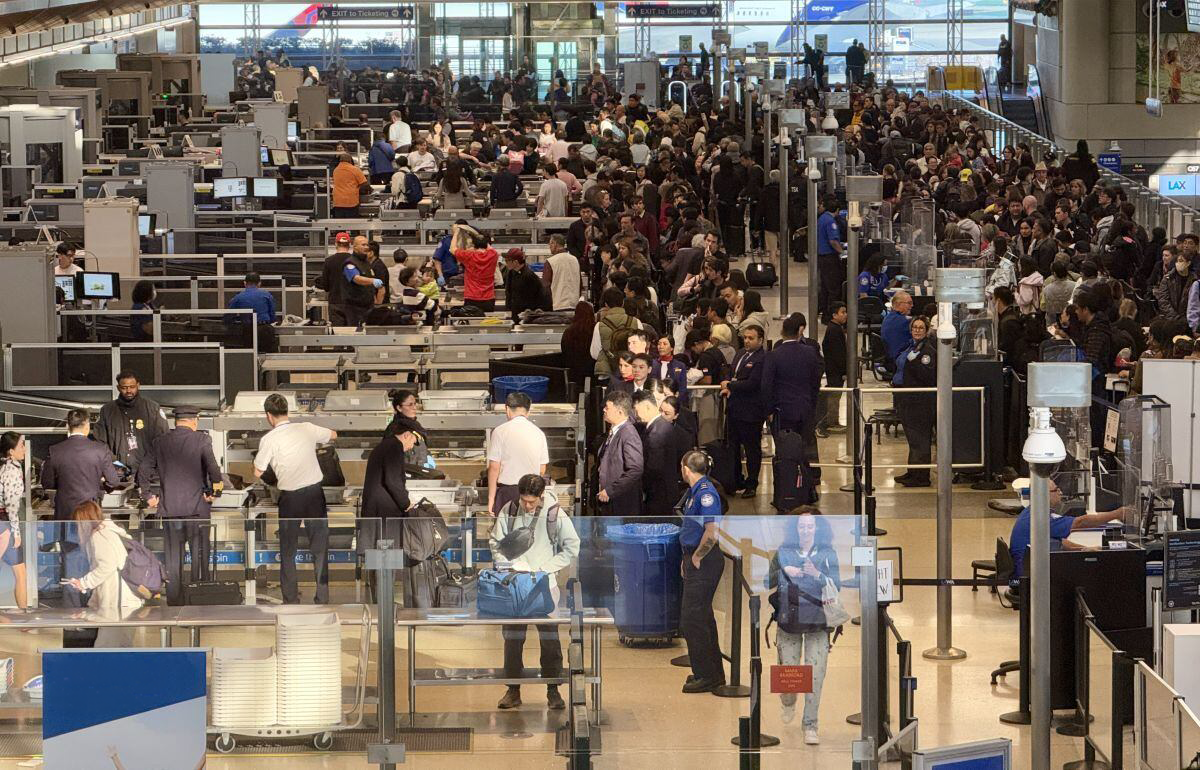
As it turns out, theoretical capacity does not automatically mean stable daily performance. A lane may reach a high throughput under ideal conditions, while the security checkpoint as a whole still experiences queues, staff pressure or reclaim congestion. True checkpoint optimization is therefore not about improving one part of the process for the best result. It’s about treating the security checkpoint as an ecosystem and increasing performance throughout the whole chain.
For Point FWD, sustainable optimization starts with a clear operational baseline. It is important to understand how the checkpoint currently performs, where capacity is possibly lost and which factors influence variation throughout the day. Passenger profiles, staffing models, divest behavior, decision times and inspection processes all shape the real throughput of a security checkpoint.
A holistic approach to checkpoint optimization
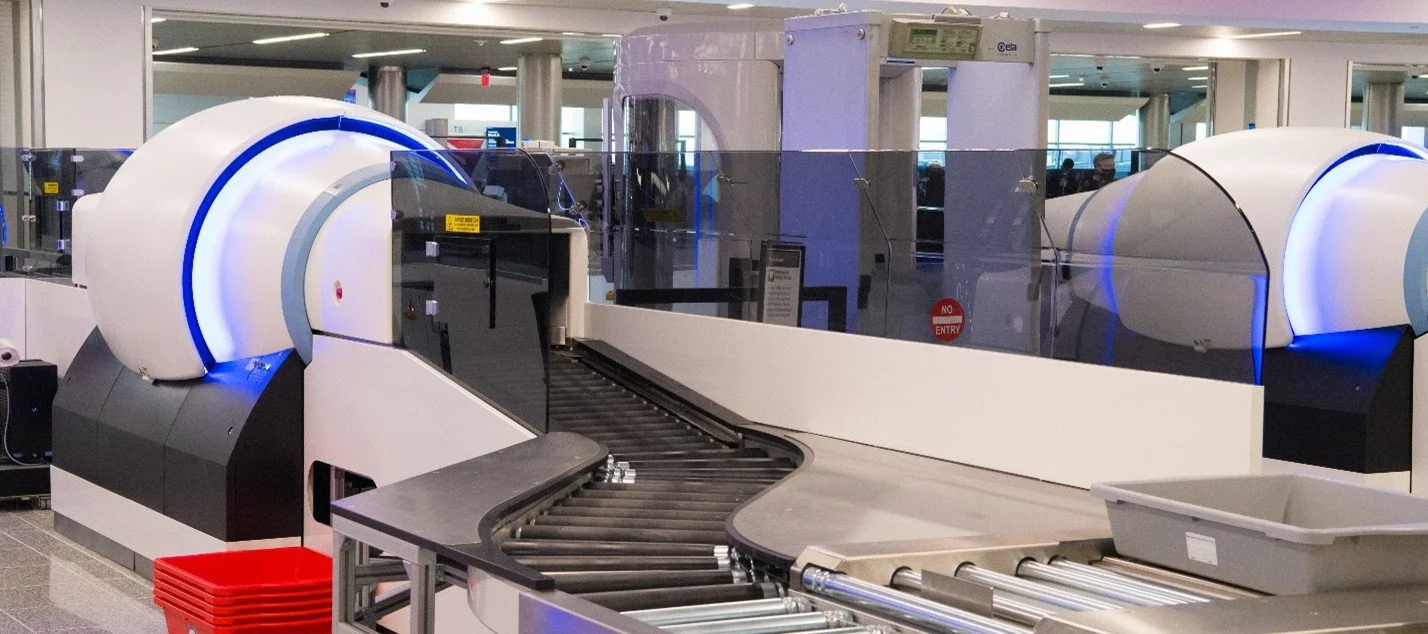
From the baseline situation, optimization becomes a matter of balance. A data-driven approach combined with operational expertise helps to identify what optimization initiatives will improve the overall performance of the security checkpoint. To achieve optimal operational performance, it is important to view these possible improvements through the combined lens of process, people and technology. Considering human factors such as passenger experience and trays per passenger, operational factors like operator workload and CONOPS, and the checkpoint technology in place, from CT scanners and EDS-CB systems to automated tray return systems (ATRS), advanced divest layouts and centralized image processing. Educated, evidence-based improvements can be suggested.
“In every checkpoint we assess, the biggest gains rarely come from a single lane or a single piece of equipment. They come from understanding how passenger flow, divest behavior, staffing and technology interact, and then tuning that system as a whole.”
From insight to validated checkpoint improvement
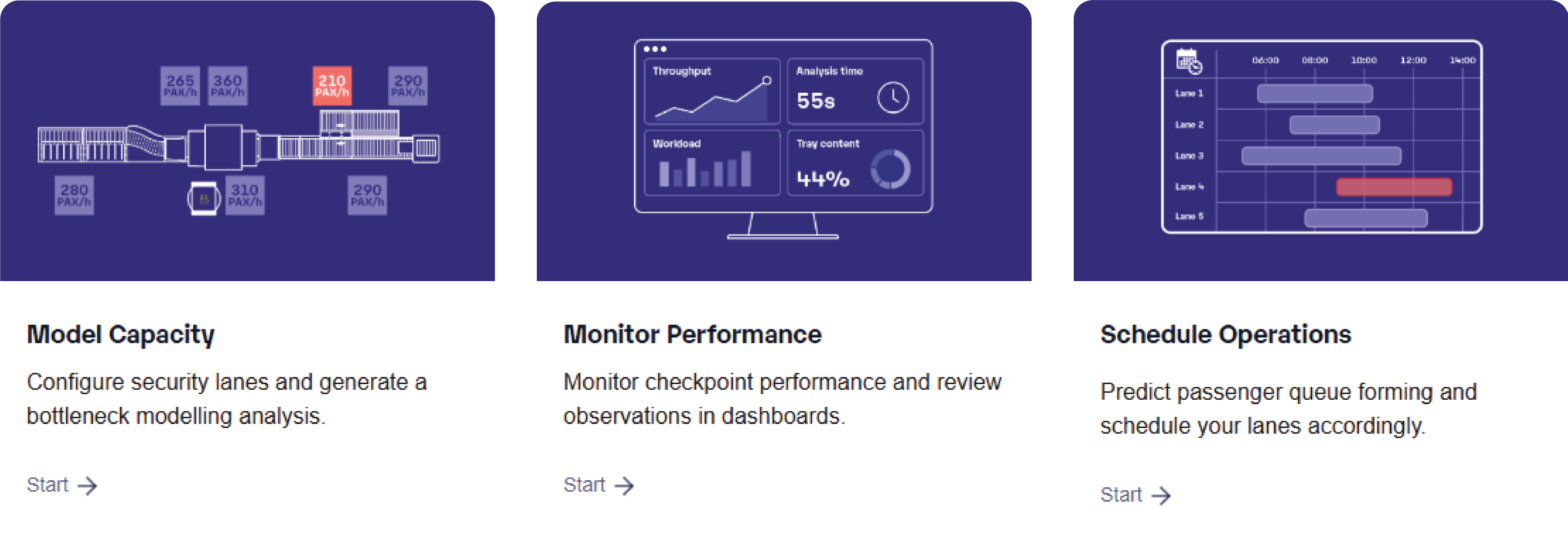
Validation and testing of the proposed improvements is key. Our Advanced Insights Platform (AIP) supports this end-to-end: continuously monitoring checkpoint KPIs such as throughput, divest-to-reclaim times, alarm rates and lane utilization, and modelling alternative lane configurations, staffing rosters and arrival patterns to quantify the impact of each proposed improvement before it is implemented. To validate possible changes, it is possible to simulate the proposed optimization. Simulation brings the checkpoint to life and shows how the checkpoint would function while fully operational. This way, a lane is no longer optimized on a gut feeling but on an educated decision. By creating a clear optimization approach, airports are able to move from attainable capacity to sustainable performance.
Optimize your security process
Ready to move from attainable capacity to sustainable checkpoint performance? Book a 30-minute call with Tjeerd van der Meulen and his team to discuss where the biggest gains sit in your operation, before peak season hits.