Moving to self-service security checkpoints with
Guided Divest
Dynamic and passenger-specific
divest instructions
Guided Divest provides passengers with clear, real-time instructions during the divest process. The solution recognizes selected clothing and accessories and translates this information into passenger-specific guidance at the security lane.
Less uncertainty for passengers. Less repetitive guidance for operators. A steadier security throughput.
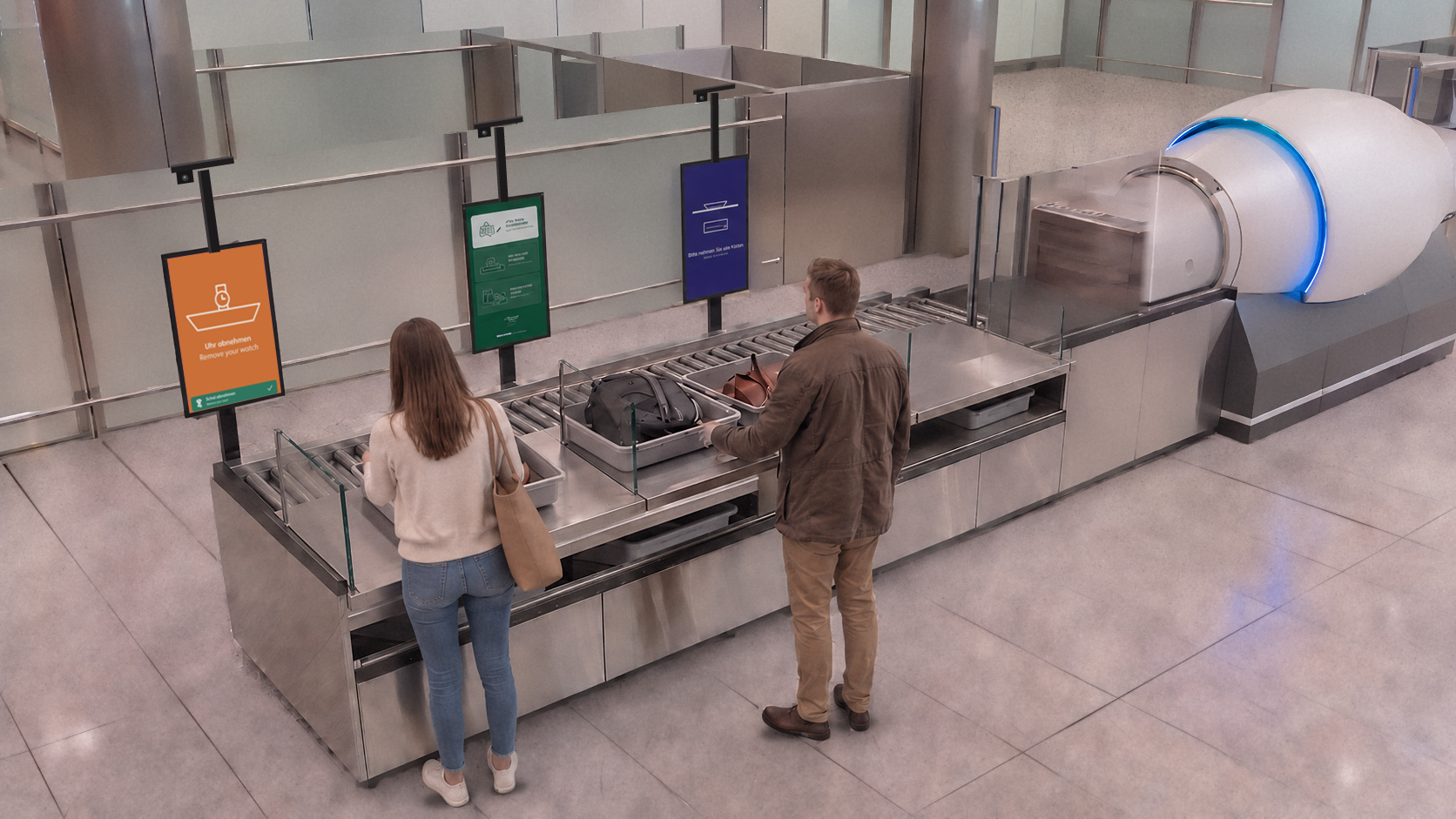
Rendered Image - for illustrational purposes only
The hidden bottleneck
Divest is one of the first places where passengers come into contact with the process of security screening, one of the most stressful moments in the airport journey. Passengers need to understand what to remove, how to use the trays and when they are ready to continue. With operators having to keep the lanes moving, incorrect divesting can become a real operational problem.
Generic guidance
Passengers differ in experience, language and what they carry or wear. Generic instructions are not always understood or followed in time, leaving passengers unprepared when they reach Divest.
Operator pressure
Operators must repeatedly guide passengers, correct mistakes and maintain throughput at the same time. This makes the process highly dependent on continuous operator attention.
Downstream impact
Items that are not removed at Divest can lead to additional alarms, pat-downs and corrective actions later in the process, increasing workload and reducing throughput stability.
How it works
Recognize what requires action
Guided Divest recognizes when a passenger enters the divest position and detects clothing and accessories that are required to be divested. It can even detect partially occluded items.
Show the right instruction
The passenger-facing display combines dynamic guidance with standard airport-specific instructions, presented in a clear and visual sequence.
Confirm correct divest
Guided Divest confirms on the screen that the required items have been placed in the tray, giving the passenger a clear signal that divest is complete and they are ready to proceed.
Smarter Security, Happy Passenger
Better prepared passengers
Clear, timely instructions help passengers understand what to remove before screening, reducing uncertainty at the point of action.
Fewer avoidable corrections
Passenger-specific guidance can reduce repeated instructions, missed divest actions, and re-divest situations later in the process.
Lower operator pressure
Operators spend less time repeating standard guidance and can focus more attention on passengers who need support or intervention.
More stable checkpoint flow
Better preparation at Divest helps reduce unnecessary disruption further down the lane, supporting a smoother and more consistent operation.
Configured for your checkpoint
Guided Divest is configured around the airport’s own Concept of Operations. Instructions, timing, languages, visual design and system positioning can be adapted to the local lane setup and passenger process.
Instruction logic
Define which dynamic and static instructions passengers receive.
Languages
Select the languages and terminology used in the interface.
Timing
Set when instructions appear and how long they remain visible.
Visual design
Adapt imagery, instruction cards and visual identity to the airport.
Screen positioning
Place the passenger display where guidance is visible and actionable.
Camera positioning
Configure detection around the physical layout of the Divest position.
Where we go from here
We are currently running a pilot with Guided Divest on an operational lane at a major European airport hub.
Interested in piloting Guided Divest at your airport?